Mobile App Development for Enterprise: iOS & Android Guide

If your business is growing past spreadsheets, email, and manual workflows, a dedicated mobile app can become the single tool your team and your customers rely on every day. Enterprise mobile app development for iOS and Android is not about copying a consumer app template — it's about designing a system that fits how your specific business actually operates, then building it to run reliably at scale.
Key Takeaways
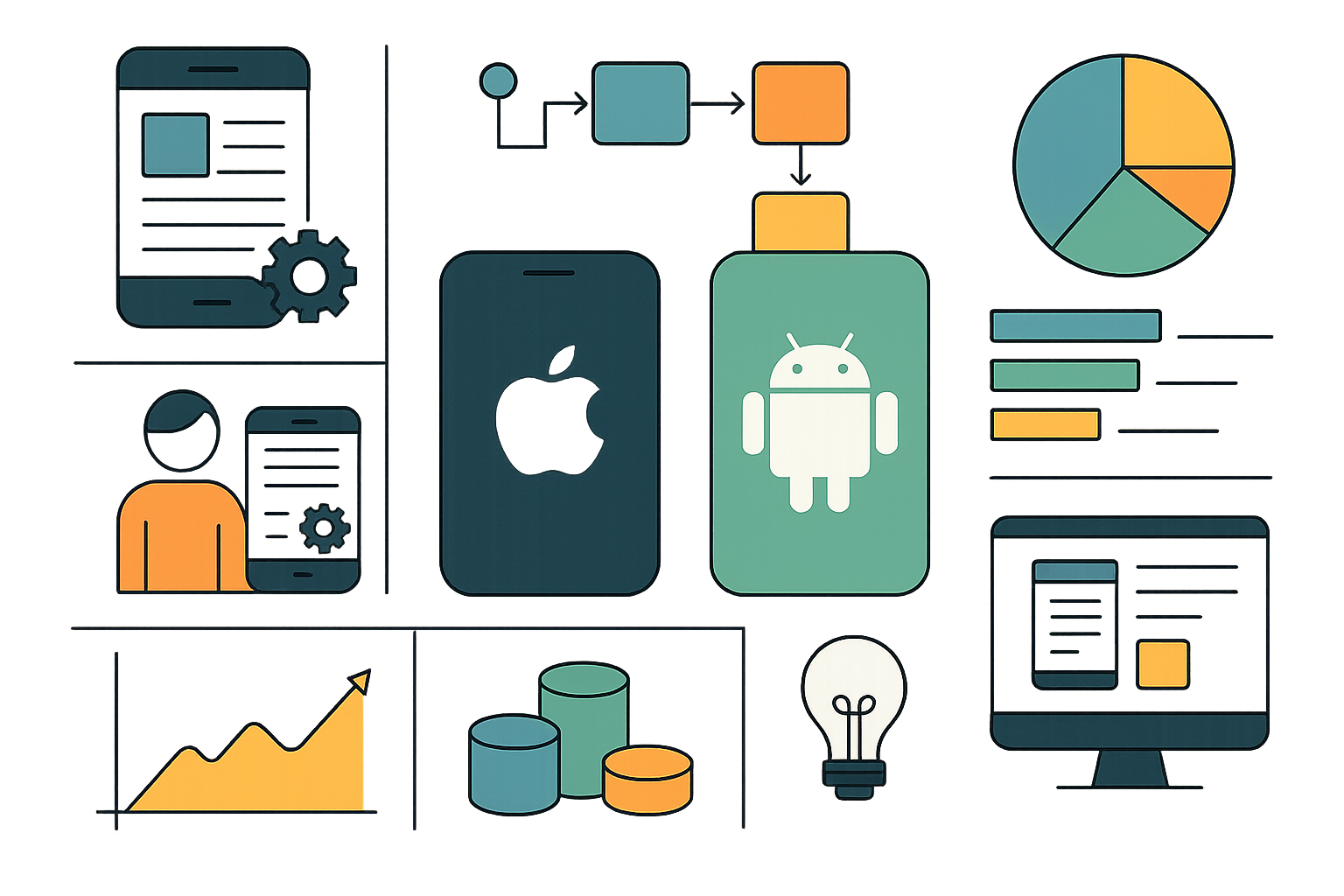
- Enterprise mobile apps are built around your existing processes, not the other way around — they should reduce work, not add steps.
- Choosing between iOS, Android, or cross-platform depends on your users, your budget, and how deeply the app needs to integrate with device or business systems.
- Security, data structure, and integration with your existing tools matter more for enterprise apps than visual polish alone.
- A single senior team that owns design, development, and launch typically moves faster and communicates more clearly than a large, layered agency.
- The right partner should be able to explain technical decisions in plain business terms, not just deliver a finished build.
What Enterprise Mobile App Development Really Involves
"Enterprise" doesn't necessarily mean a huge corporation — it means an app built to support real business operations: managing inventory, coordinating field staff, handling customer accounts, processing orders, or connecting to internal systems that already run your company. That's different from a simple app built to showcase a menu or a portfolio.
A serious enterprise mobile project usually covers several layers working together:
- The client app — what your staff or customers actually see and use on their phones or tablets, on iOS, Android, or both.
- The backend — the server-side logic and database that store your data, handle business rules, and keep everything in sync.
- Integrations — connections to your existing tools, such as accounting software, CRM systems, payment providers, or internal databases.
- Authentication and security — controlling who can log in, what they can see, and how sensitive data is protected in transit and at rest.
Skipping any of these layers is usually where "quick" apps fail once real usage begins. A login screen and a nice interface are the easy part; the backend logic and integrations are what determine whether the app actually saves your business time or creates new problems.
Why Business Owners Without a Website Often Start Here
Many business owners assume they need a website first and an app later. In practice, some businesses — particularly service-based, field-based, or logistics-heavy ones — get more day-to-day value from a mobile app than from a traditional website, because their staff and customers are already working from a phone. A website can still matter for credibility and search visibility, but the app is often what actually runs the operation. The two can also be built as one connected system rather than two separate projects, which avoids duplicated data and duplicated cost.
iOS vs Android vs Cross-Platform: Choosing the Right Approach
This is usually the first real decision, and it should be based on your users and your goals — not on personal preference for one platform.
When to Build for iOS First
iOS tends to make sense when your audience is customer-facing in markets where iPhone usage is high, when brand experience and design polish are a priority, or when you're targeting business users who are typically issued company iPhones. Apple's App Store also has a stricter review process, which can mean a longer path to launch but tighter quality control.
When to Build for Android First
Android is often the better starting point when your users are frontline or field staff using company-issued Android devices, when you need lower-cost hardware compatibility across many device types, or when your primary markets have higher Android market share. Android also offers more flexibility for certain hardware integrations, such as barcode scanners or custom peripherals.
When Cross-Platform Makes Sense
Cross-platform frameworks let you build one codebase that runs on both iOS and Android, which can reduce development time and cost when you need both platforms from day one and the app doesn't rely heavily on device-specific features. This is often the practical choice for internal business tools, ordering apps, and customer account apps where speed to market and one consistent codebase matter more than squeezing out every native performance detail.
There isn't a universally "correct" answer here. The right approach depends on where your customers or staff already are, what the app needs to do, and how it fits your budget and timeline. A good technical partner will walk through these trade-offs with you before writing a single line of code, rather than defaulting to whichever platform is easiest for them.
How LegoTech Approaches Enterprise Mobile Projects
LegoTech is a freelance software practice based in Tel Aviv, working with companies worldwide on custom web, mobile, and AI systems. The core idea behind the work is simple: software should be built around your business, not the other way around. Instead of stretching an off-the-shelf platform to fit your workflow, the system is designed specifically for how you operate.
Every project is designed, built, and launched by one senior team — not handed off between multiple departments, junior developers, or outsourced subcontractors. That matters for enterprise mobile work in particular, because mobile apps rarely exist in isolation. They connect to your operations, your data, and often to other systems you already use, and having one accountable team that understands the whole picture reduces miscommunication and rework.
What This Looks Like in Practice
- Understanding the business first. Before any design or development starts, the priority is understanding what the app needs to do for your business — who uses it, what problem it solves, and how it should fit your current processes.
- Choosing the right technical approach. Whether that means native iOS, native Android, a cross-platform build, or a connected web-and-mobile system depends on your specific goals, not a fixed template.
- Building the full stack. This includes the mobile app itself, the backend, and any integrations your business needs, rather than delivering just a front-end shell.
- AI where it genuinely helps. For businesses that can benefit from it, mobile systems can also incorporate AI features — such as smarter search, automated data processing, or intelligent workflows — where it adds real value rather than as a marketing add-on.
For a business owner with no existing website or digital system, this approach means you're not left managing multiple vendors or trying to translate between a designer, a developer, and an IT consultant. One team designs, builds, and launches the system, and can explain each decision in terms that connect back to your business goals.
Frequently Asked Questions
Do I need a website before I build a mobile app?
Not necessarily. Some businesses get more practical value from a mobile app first, especially if staff or customers already work primarily from a phone. A website and an app can also be planned together as one connected system, which is often more efficient than building them separately later.
Should my enterprise app be native or cross-platform?
It depends on your users and goals. Native iOS or Android development is typically better when you need deep integration with device features or maximum performance. Cross-platform development is often the more practical choice when you need both platforms quickly and cost-effectively, and the app doesn't rely heavily on platform-specific hardware. This decision should be made based on your specific business, not a default preference.
How long does an enterprise mobile app typically take to build?
Timelines vary significantly based on scope — the number of features, the complexity of integrations with your existing systems, and whether you need one platform or two. A simple internal tool will take far less time than a customer-facing app with payments, accounts, and multiple integrations. A clear scope discussion at the start is the best way to get a realistic estimate for your specific project.
Can an enterprise app connect to the software I already use?
In most cases, yes. Integrating with existing tools — such as accounting platforms, CRMs, or internal databases — is a core part of enterprise mobile development. The specific integrations possible depend on what systems you currently use and whether they offer an API or another way to connect, which is something to map out early in the planning process.